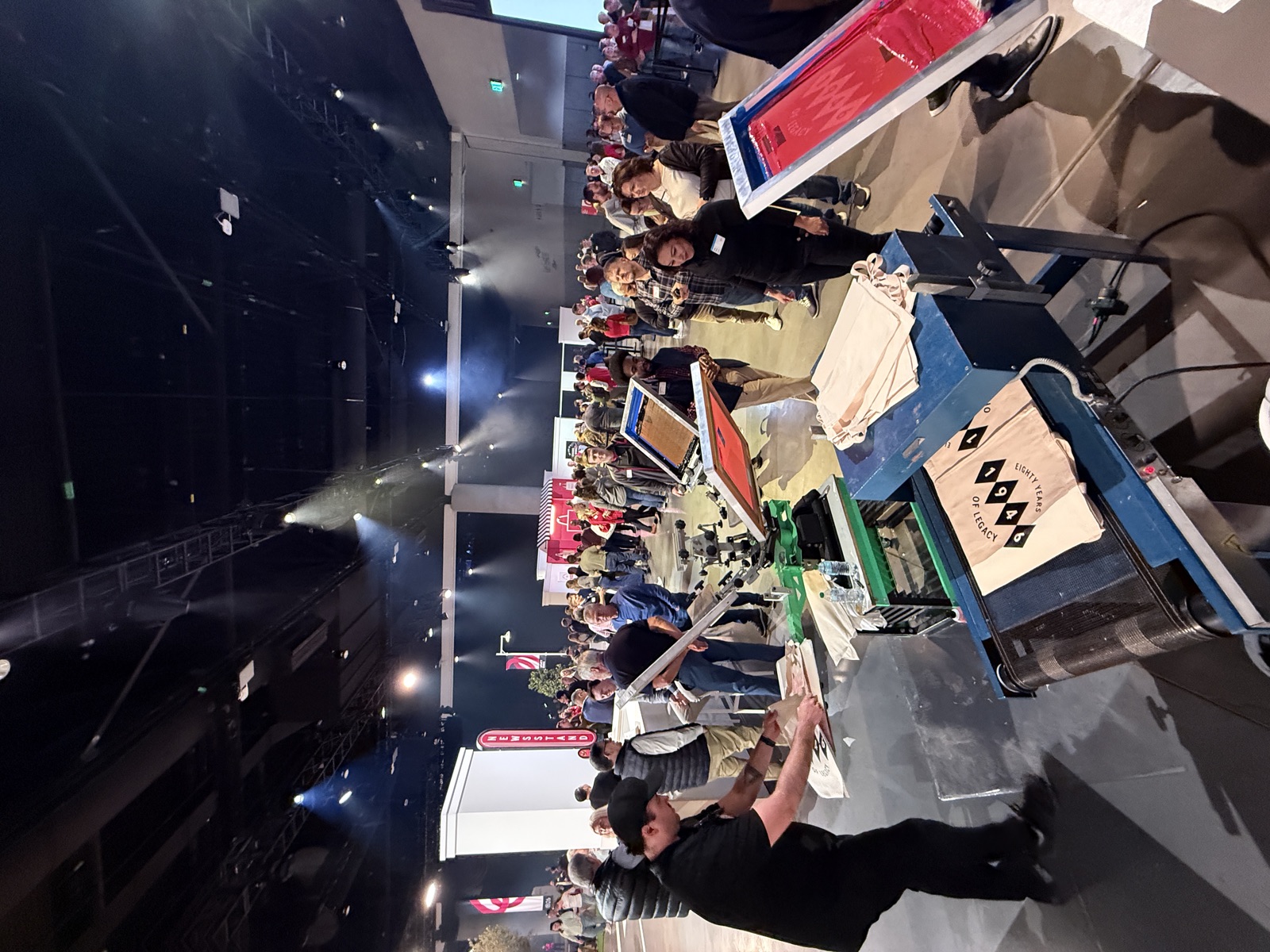
There is a reason the best event merch booths look like a pop-up retail shop instead of a folding table covered in giveaways: they are merchandised that way on purpose. A merch menu that "sells out" — where the booth has a line out front and almost nothing left to pack at the end — is not luck. It is the result of choosing the right products, presenting them like a real line, tiering them so every guest finds something, and designing the booth flow so the experience keeps moving. This guide shows how to build that menu for any corporate activation, product launch, concert, or conference.
Think like a buyer, not a giver
The mindset shift that changes everything is treating your merch like a retail assortment a buyer would put on a shop floor, not a pile of swag to hand out. A buyer curates: a few standout pieces, a clear theme, a tight color story, and a reason for each item to exist. When you apply that thinking, guests stop seeing "free stuff" and start seeing product they actually want — which is what creates demand, photos, and a line.
Pick a hero product and build around it
Every great menu has a hero — the one item that defines the drop and gets people excited. Usually that is a soft-style tee or a structured cap with a standout design. Build the rest of the menu in support of it: a coordinating second apparel piece, an everyday item like a tote or bottle, and maybe a small premium tier. The hero sets the tone and the palette; everything else should look like it belongs in the same collection.
What makes a strong hero
- High keep rate — something people genuinely want to wear or use, like a quality tee or cap.
- A great print — one strong design that photographs well and reads as brand, not clipart.
- Live-friendly — a product and method that can be produced quickly at the booth so guests watch it get made.
Tier the menu so every guest converts
A sold-out booth gives everyone a reason to step up, which means tiering. Mirror how a shop is priced:
- The everyone tier — a budget tee or tote that every guest can grab, keeping the line moving and the cost per guest low.
- The featured tier — the hero product, the piece people line up for and post about.
- The premium tier — a hoodie, embroidered cap, or insulated bottle for VIPs, staff, and superfans.
Tiering also protects your inventory math: the everyone tier absorbs volume, while the premium tier adds perceived value without blowing the budget.
Keep the design language tight
Sold-out menus look coherent. Use a small, consistent set of designs and a disciplined color palette across every product so the table reads as one collection. Two or three artworks applied across the menu is almost always stronger than a dozen one-offs. A tight design language is also faster to produce live, because the crew batches similar jobs instead of resetting for every variation.
Design the booth flow around the menu
A great menu still fails if the booth jams. Lay out the station so guests move in one direction: see the assortment, choose a product and design, watch it get made, and pick it up. Pre-deciding choices for guests — a clear menu board, a limited set of options — is the single biggest speed lever. For high-traffic events, pre-print a base run of the everyone tier so volume is guaranteed, then run a live station for the hero product and any personalization. Merch Troop builds this hybrid constantly: a prebuilt base layer plus a live booth for the experience.
Use scarcity and personalization to drive demand
A menu that feels limited sells out faster. Numbered drops, event-only colorways, or a premium tier in short supply create urgency. Live personalization — adding a guest's name, the event date, or a city — turns a giveaway into a keepsake and gives people a reason to wait in line. Used sparingly, these touches make the difference between merch that gets handed out and merch that gets coveted.
Frequently asked questions
How many products should a sell-out menu have?
Two or three core products plus an optional premium tier. A focused menu moves faster, looks more like a real collection, and is far easier to forecast than a sprawling giveaway table.
Should we charge for merch or give it away?
Both models work. Free merch maximizes reach and brand exposure; paid or "earned" merch (unlock with a demo, a sign-up, or a purchase) raises perceived value and naturally manages demand. The menu structure is the same either way.
Can Merch Troop help merchandise our menu?
Yes. Merch Troop plans the product mix, tiers, designs, and booth flow as one program, and serves activations across Orange County, Los Angeles, San Diego, Las Vegas, and nationwide.