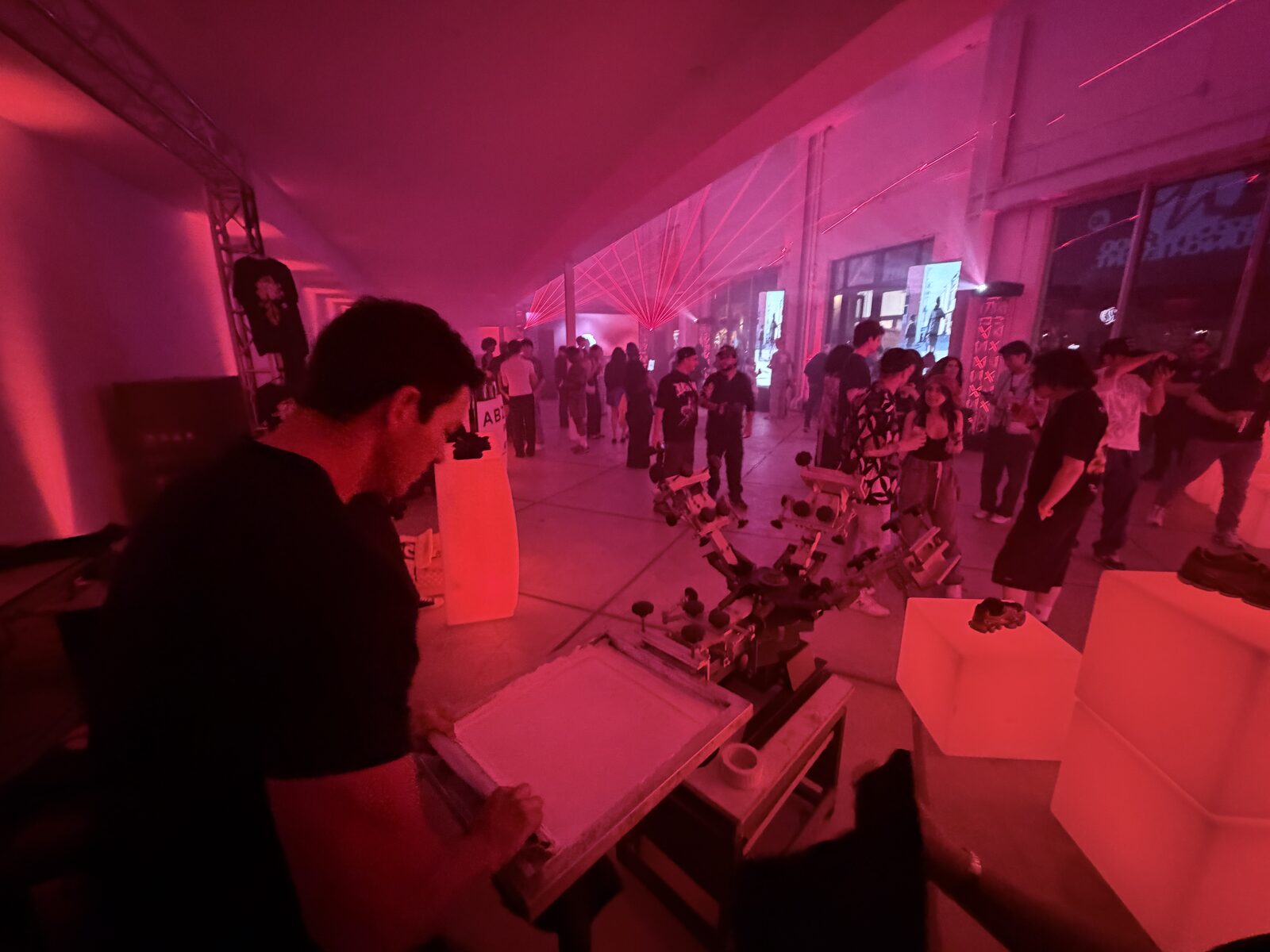
Private events break the usual economics. There is no marketing budget, no sponsor and no lead target — the person paying is standing in the room, and what they are actually buying is the part of the evening people describe to each other afterwards. Thirty or eighty pieces is a small order by any production standard, so the value has to come from the experience and the personalization rather than from the price per unit, and the program should be planned that way from the first conversation.
Small runs, priced honestly
Below roughly a hundred pieces, cost per unit stops being the useful number. Setup-heavy methods spread their cost over too few items to justify themselves, so the mix shifts toward methods that carry no real setup penalty. Forty pieces will almost always come out cheaper and better looking through DTF or an applied patch than through a multi-color screen setup. That also frees you to run several designs across one small guest list instead of forcing the whole room into a single graphic, which is usually what the host wanted in the first place.
Personalization is the entire product
At a private party the piece carrying somebody's name, nickname or the date is the one that gets kept. Guests are not looking for a party logo; they want proof they were there, ideally with something specific to them on it. Names, table numbers, running jokes and per-guest color choices cost very little to add at this scale and they are exactly what turns a favor into something worn again. A pick-your-own counter, where guests choose the item, the color and the design themselves, does more for a small room than any single perfect design ever will.
Entertainment value over unit economics
The station is furniture with a job: it gives guests who do not know each other something to stand beside and talk about. That argues for putting it where the party already is rather than in a tidy side room, for running it through the middle stretch of the evening when the energy dips, and for choosing methods that are interesting to watch happen. A press, a heat station or a laser all give people something to look at. A box of pre-made merchandise on a trestle table does not.
What it costs, and what is left
Staffing is $250 an hour for the first station and $125 an hour for each additional one, setup and teardown included, and most private events want a single station for three or four hours. Venues in Orange County, LA and San Diego carry no travel fee and a $3,000 event minimum; outside those markets a flat $900 travel allowance applies and the minimum rises to $4,500. Because the guest list is small and known, we size the run to it with a modest overage rather than a case of spares — and whatever remains is usually something the host hands out later rather than a storage problem. Send the date, the headcount and what is being celebrated through the work order.