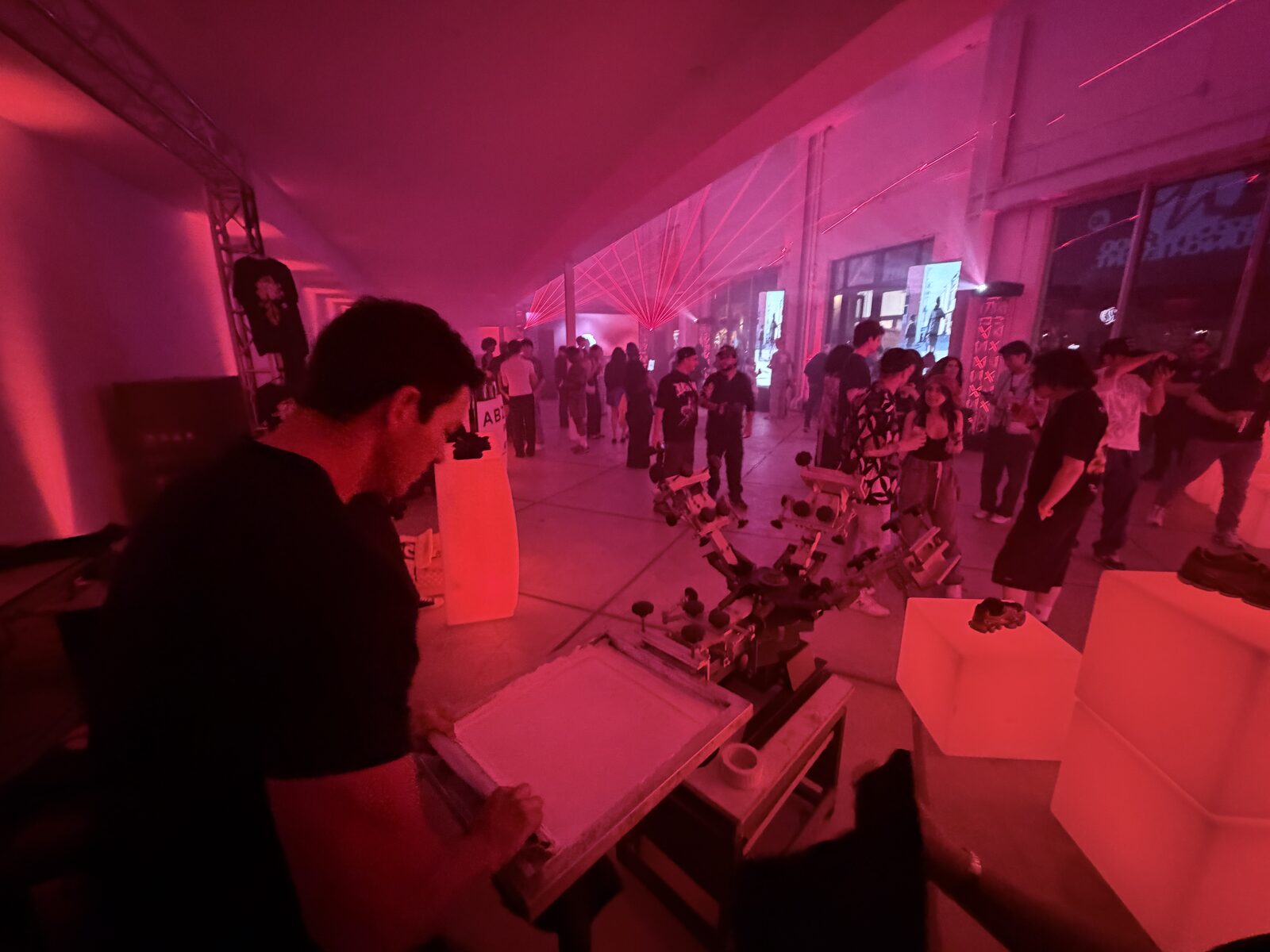
Austin is a travel market with a calendar that concentrates most of its demand into a handful of weeks. During those weeks the venue you have booked downtown is, for the other fifty-one weeks of the year, a bar. That is the defining planning fact here: no dock, no freight elevator, no storeroom, a load-in that has to finish before the street closes, and a program that has to fit behind a counter and be replenished by hand for the rest of the day. Plan it like a pop-up, not like a booth.
The two-weekend advantage
Austin's largest music festival runs the same event twice on consecutive weekends, which is something no other market on this site offers. It means a program can be genuinely tested rather than forecast — you see what sold, which sizes ran out, which design people photographed — and then re-cut for the second weekend against real numbers. We plan those as two orders with a deliberate gap between them instead of one large buy, and the second order is almost always the better-performing one because it is the only one based on evidence.
Downtown load-in during badge weeks
Street closures, permitted load-in windows and a grid full of competing activations mean the honest answer to how early the crew needs to arrive is earlier than anyone wants to hear. Programs built for these weeks are compact by design: one or two hero items, decoration that can happen on site, and stock arriving in daily quantities rather than as a pallet with nowhere to live. Screen covers the one signature design running all week, DTF covers the artwork that changes daily, and totes carry the volume hours when the line outgrows the counter.
The rest of the Austin calendar
Outside festival season the market is corporate and social. Tech offices in East Austin and up around the Domain run all-hands and launch programs with the same saturation problem as the Bay Area, and the same answer: fewer, better pieces with real personalization. Hill Country weddings out toward Dripping Springs and Fredericksburg are small-run, outdoor, hot in the afternoon and cool after dark, which puts a layer near the top of the list. Conference business downtown behaves like any convention market, exhibitor kit and all.
Travel and staffing
Austin carries the flat $900 travel allowance applied to every market outside Orange County, LA and San Diego, and a $4,500 event minimum in place of the $3,000 local one. Staffing is $250 an hour for the first station and $125 an hour for each additional one, setup and teardown included. Because Texas dates cluster so tightly, the practical constraint in this market is crew availability rather than budget. Send the dates, the venue and the headcount through the work order.