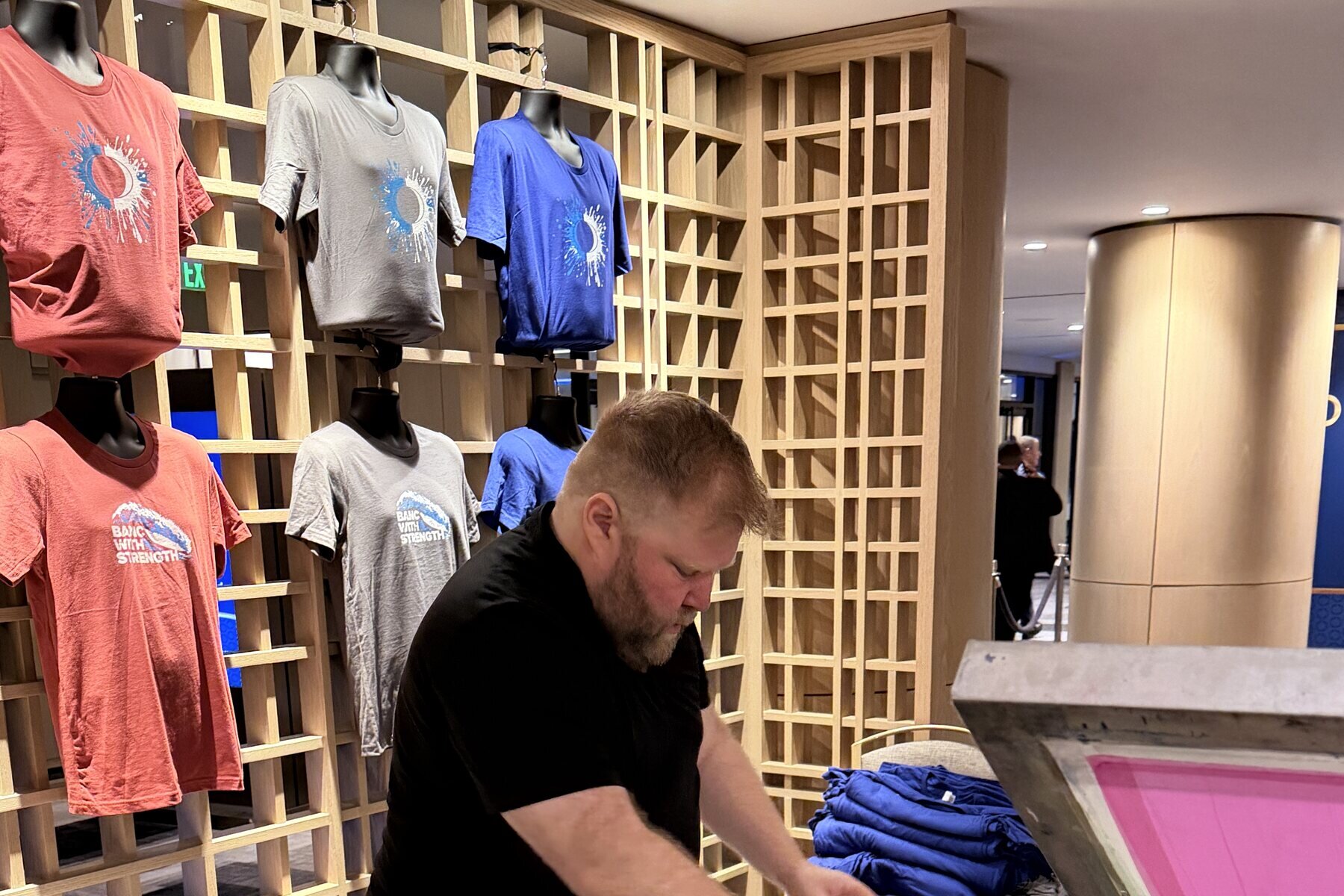
A shirt bar is an anchor, not a default. It works when the shirt is genuinely the thing you want guests carrying out — a piece they picked, in a size that fits, in a program where it is the centerpiece rather than one of six line items. It stops working when your crowd already owns too many tees, when your budget needs to reach more people than a garment tier can cover, or when the floor plan cannot absorb a line. Deciding that early is the difference between a program built around a bar and one that merely contains one.
When it should anchor the program
Three conditions have to line up. The takeaway needs to be personal, because a bar sells the choosing as much as the object. The dwell time has to be real — guests with thirty spare minutes, not three. And the item has to justify the wait, which a well-chosen garment in the right color does and a generic promo item never will. Weddings, milestone celebrations and private parties usually meet all three. Reception hours and trade show floors frequently meet none of them, which is a scheduling reality rather than a verdict on the item.
When headwear or patches outperform it
Headwear beats a garment on two axes it cannot compete on: there is no size question to resolve, and a cap keeps getting worn in public long after a tee has been demoted to yard work. Where a program is sponsor-funded and visibility is the metric, embroidered caps or beanies tend to return more impressions per dollar spent. Patches beat both when the crowd is large and the window is short — a guest picks a design, it goes onto a tote or something they already own, and the whole interaction is over in under a minute. High attendance plus few hours makes that math difficult to argue with.
Pairing it with a second station
A bar rarely stands alone in a well-built program. The most useful second station serves a different appetite rather than offering a faster version of the same one — a hat station for guests who will not queue for a garment, a patch or UV DTF table for anyone who wants something small and instant. Method behind the counter follows the same logic: screen carries the house design at volume, DTF handles names and full-color variants. Two stations also split the queue by decision speed, which matters more than raw output.
Throughput against queue tolerance
The binding constraint is almost never the press. It is how long your guests will stand there before deciding the merch is not worth it, and that tolerance swings hard by crowd: a wedding will wait, an expo floor will not. So we work backwards from the hours available, the share of attendees who will genuinely engage, and the wait you are willing to accept. Crew is $250 an hour including setup and teardown, so a second station usually costs less than the goodwill lost to a line that never clears. Send your attendance and item list through the work order.