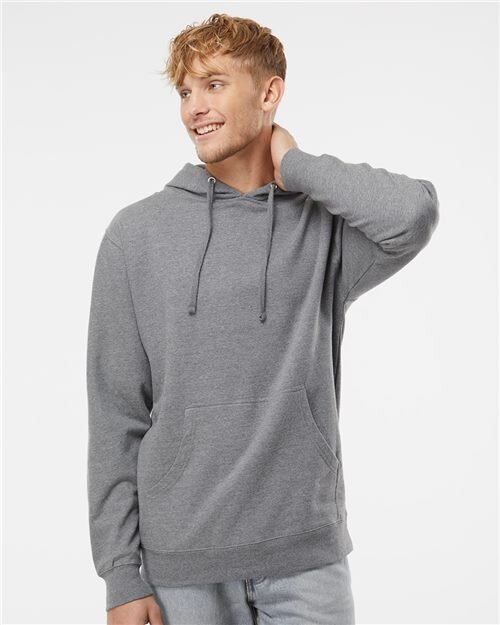
Fleece is the tier guests self-select into, and that is the entire planning problem. Put heavyweight pieces on a table beside cheaper items and something predictable happens: nearly everyone wants one, far fewer will wait for one, and the unit cost is high enough that guessing wrong in either direction is expensive. Treated as a deliberately scarce upper tier rather than a default item, fleece does more for a program than any other line on the list. Treated as a blanket giveaway, it eats the budget that should have reached the rest of the room.
What a premium tier is actually for
It signals that the program was considered. A heavyweight piece is the thing people keep, wear well outside the event, and mentally attribute to whoever gave it to them — a completely different job from the item handed to everyone at the door. That makes it the right call for the small, high-value audiences sitting inside a larger program: speakers, sponsors, staff, a leadership offsite, the first redemptions of an evening. It is the wrong call as a universal item for a thousand-person crowd, where the same money spread across a broader mix reaches far more people with something they will still use.
Quantity strategy when unit cost is high
Model this tier separately from the rest of the program, because fleece uptake is never apparel uptake. Three structures work. Reserve it for a named group: a fixed count for speakers, sponsors or staff removes the guesswork entirely. Or cap it in public: a first-come tier everybody understands is limited turns scarcity from a supply failure into part of the experience. Then forecast the room: an outdoor evening event moves far more fleece than a midday indoor one, and a crowd flying home moves noticeably less. Any of the three means the conversation about leftovers happens during planning rather than at load-out.
Matching a method to the item
Weight changes what belongs on it. Screen: a bold one- or two-color mark reads as premium on fleece and costs the least at quantity. Embroidery: more premium still, and the usual answer when the piece is meant to look bought rather than given. DTF: fine detail and full-color art belong on a transfer. Whatever the method, front pockets and heavy seams constrain placement far more than on lighter items — we flag that during art review, before any blanks are committed.
What it does to the budget
Fleece is the single largest lever in a merch budget, which is why we size it first and let the rest of the mix flex around it. A tightly sized premium tier plus a generous base tier almost always outperforms one mid-priced item given to everybody. The cost guide shows how the tiers stack against each other; the work order returns the version built around your own attendance and item list.