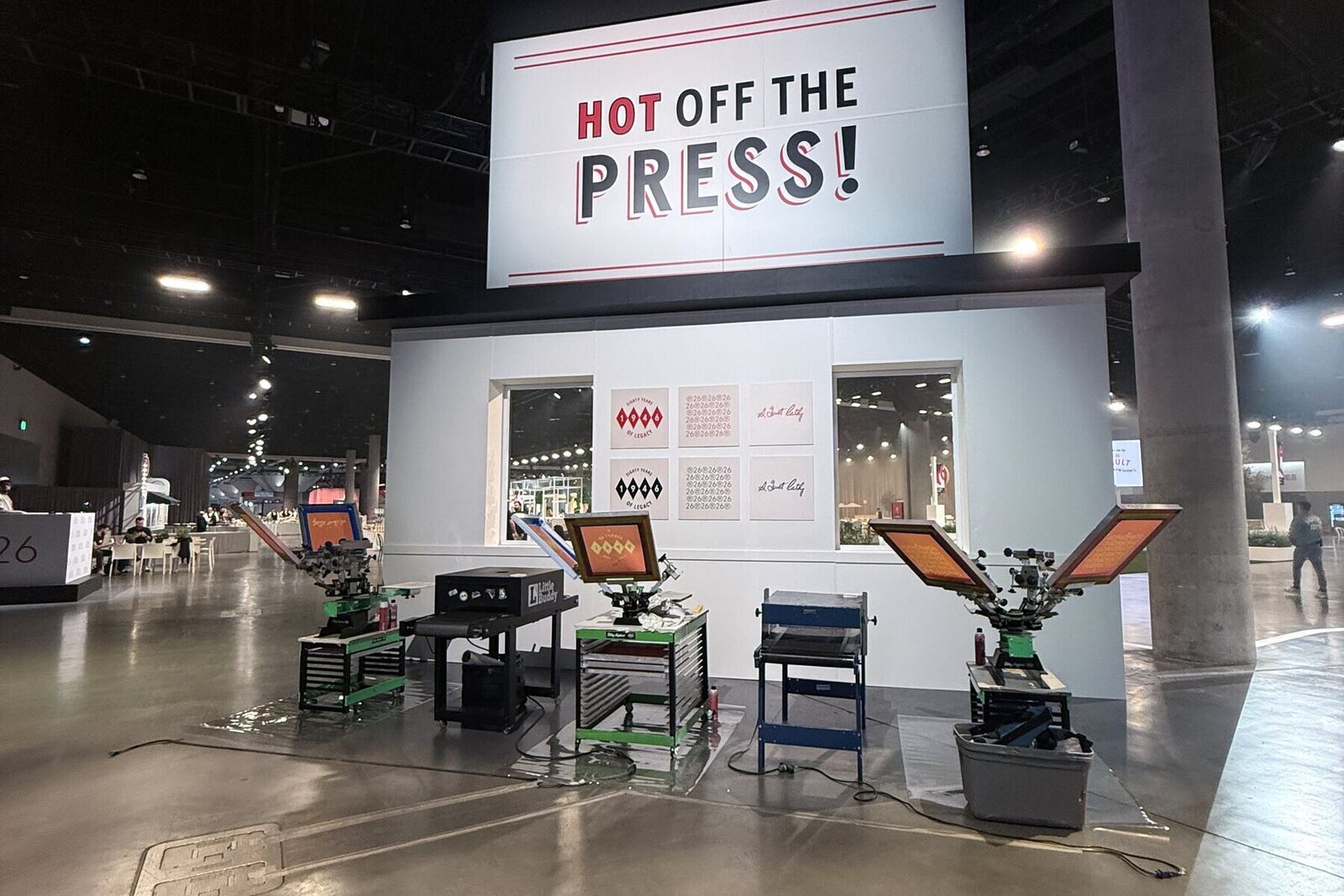
A trade show program is judged on lead quality, which makes it the only event type where handing out fewer pieces can be the correct answer. Merchandise anyone can grab in passing produces footfall and nothing else — no scan, no name, no follow-up. Merchandise that requires a badge scan, a short conversation or a demo produces a record your team can work afterwards. So the planning question is never what to give away. It is what each piece has to be worth before somebody will trade thirty seconds of attention for it.
Designing for the square footage you rented
Booth size caps the entire program. A ten-by-ten inline has room for one staffed position and a shallow shelf, which means one hero item and one impulse item — usually a cap or a tote that people then carry around the rest of the show for you. A twenty-by-twenty island supports two positions, a display wall and a personalization step at the end. Stock has to live somewhere too, and a case of caps eats floor you are paying for by the square foot, so we plan replenishment as daily drops rather than parking the whole order behind the counter on move-in day.
Tying the merch to a badge scan
The mechanic matters more than the item. A base piece released on a scan, a better piece released after a demo, and something genuinely good reserved for booked meetings gives your team three reasons to open a conversation and three grades of lead by the end of the day. Personalization is the strongest hold available: a name, a title or a team mark added while someone waits buys the two or three minutes a rep needs, which is why a DTF or laser step belongs at the end of the line rather than the start of it.
Drayage, union labor and the exhibitor kit
Show floors run on their own law. Material handling goes through the general service contractor at published drayage rates, electrical and rigging orders close weeks in advance at the discount deadline, and in union houses the rules about who may push a cart, run a cord or assemble a display are not up for negotiation on the morning of move-in. We build the plan from your show's exhibitor kit, order power on the same forms as the rest of your booth, and keep the footprint inside what the hall permits. Certificates of insurance, safety documentation and dock appointments go in on the published schedule rather than on arrival.
Budget, and the stock that comes home
Staffing is $250 an hour for the first station and $125 an hour for each additional one, setup and teardown included, normally costed against show-floor hours plus a setup window rather than the entire move-in day. Travel is a flat $900 allowance outside Orange County, LA and San Diego, where the event minimum also rises from $3,000 to $4,500. Agree the surplus plan before the show opens: leftover stock either ships to the next stop on your circuit, goes to inside sales as follow-up mailers, or gets sent to the people who booked a meeting and never collected. Send the show name, booth number and your scan target through the work order.