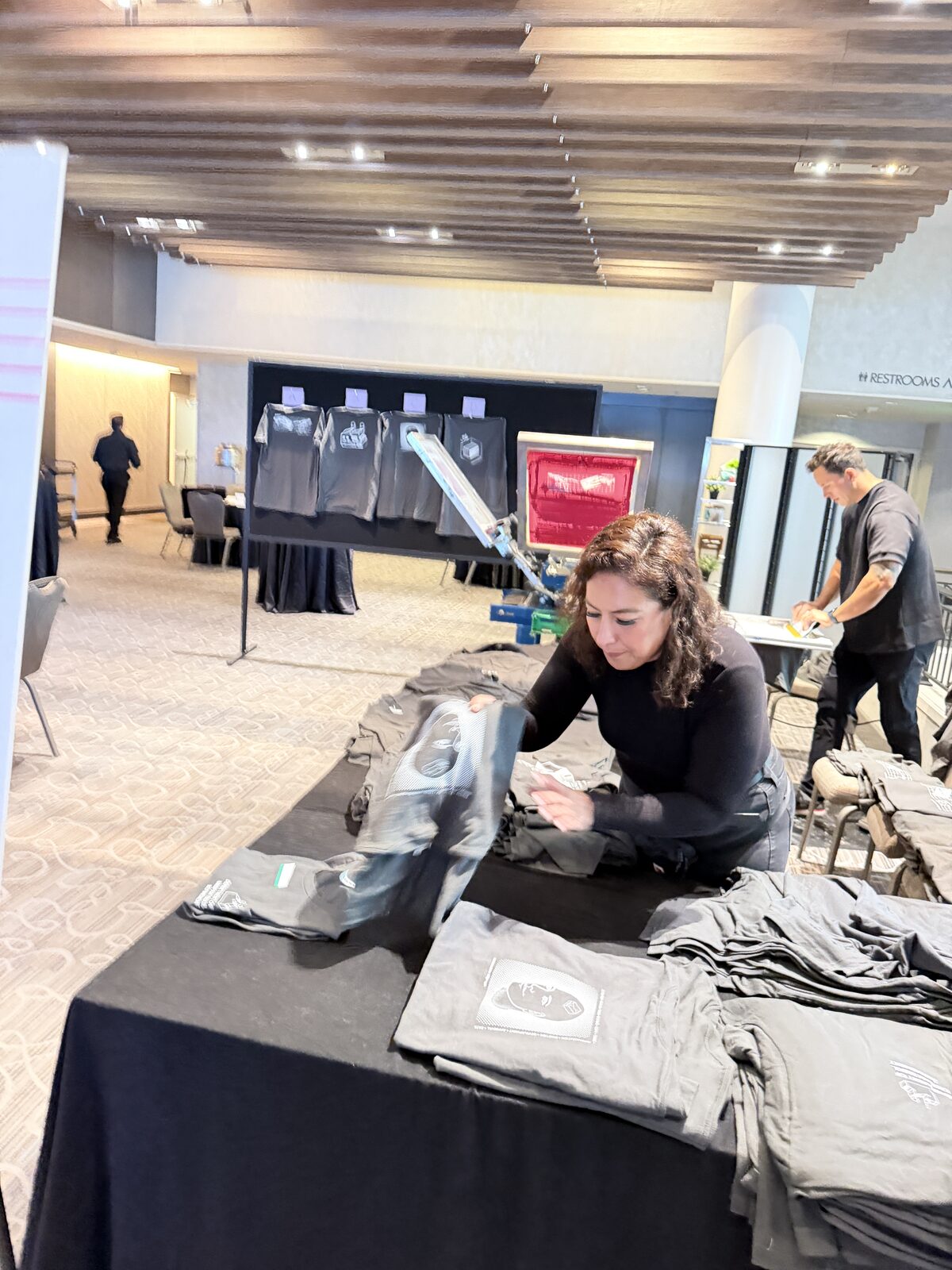
Weddings are the smallest programs we plan and the least forgiving. The guest list is finite and already known, which removes the quantity guesswork completely — and removes the margin for error with it. There is no second day to correct a mistake and no next edition to absorb the surplus. A hundred pieces made once, for people who travelled to be there, is a genuinely different discipline from ten thousand pieces made across a festival weekend, and the planning has almost nothing in common.
Keepsake or favor — decide that first
These are two different budgets pretending to be one line item. A favor is a token everybody receives, priced so that a hundred of them do not distort the catering number, and it is fine if half of them are used once. A keepsake is something a guest still owns in five years, which means a better blank, a decoration method that survives repeated washing, and a mark that reads as design rather than as advertising for the day. Most couples end up choosing one of each: a short keepsake run for family and the wedding party, and a lighter favor for the rest of the room.
Small runs invert the usual cost logic
At a hundred pieces the normal rules stop applying. Screen printing rewards volume, so it only earns its place when a single design covers the entire list. Embroidery reads as considered at any quantity and is the safer choice on caps, robes and anything that will be photographed close up. DTF carries full-color artwork, monograms and individual names without a minimum a wedding cannot meet, and a laser-engraved leather patch makes a plain piece look like it came from a shop rather than from a print run. Running three small designs across a short list usually costs less than forcing everyone into one.
Fitting the run of the day
Merch has to sit inside the schedule instead of competing with it. Welcome bags land the night before and set the tone for the weekend. Anything the wedding party is wearing has to be finished and delivered before photographs, not during them. A staffed station works best in the gap after dinner, when the room is already moving between the tables and the floor — and what people pick up at that hour is warmer than what they would have chosen at two in the afternoon, which is why a layer outdoors after sunset is reliably the most wanted item of the evening.
Cost, travel and the boxes you do not want
Staffing is $250 an hour for the first station and $125 an hour for each additional one, setup and teardown included, and most wedding programs need one station for a few hours rather than a full-day build. Venues in Orange County, LA and San Diego carry no travel fee and a $3,000 event minimum; anywhere further adds a flat $900 travel allowance and a $4,500 minimum. The one thing we insist on is a surplus plan — a run sized to the real list with a small deliberate overage, instead of a carton of unclaimed shirts arriving at your house the week after the honeymoon. Send the date, the venue and the guest count through the work order.