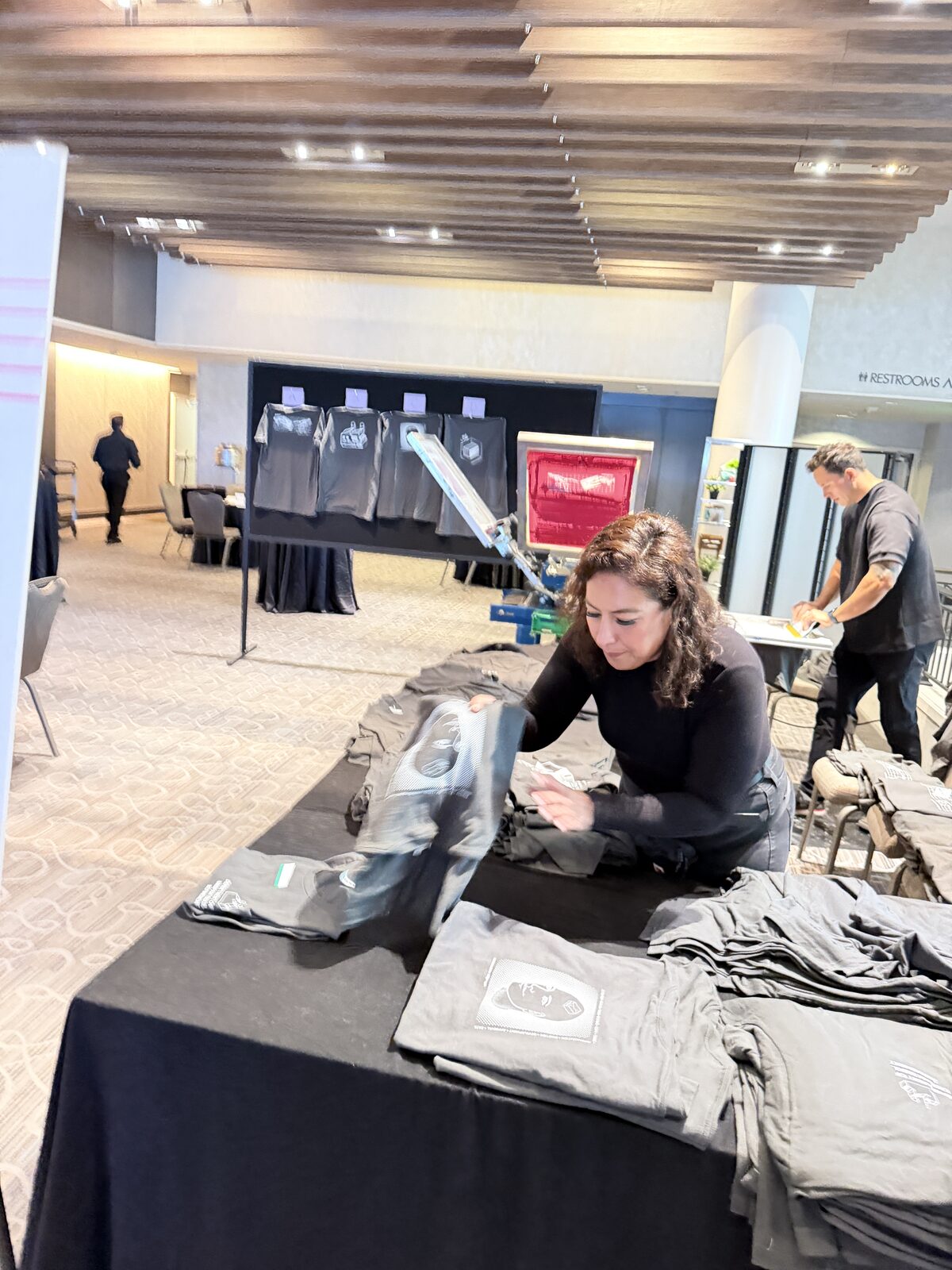
A wedding is the smallest event that behaves like a real merch program. There are multiple moments across a weekend, several distinct groups of people with different claims on you, a fixed budget, and a hard deadline. Treated as one undifferentiated pile of favors, it produces a table nobody clears. Treated as a small program — a handful of items, each assigned to a moment and an audience — it produces things people still have years later. Here's how to plan it that way.
Favor or keepsake — they aren't the same purchase
The first decision is which of two things you're buying, because they behave completely differently. A favor is given to everyone, costs little per head, and is judged on whether it's pleasant in the moment. A keepsake goes to a smaller group, costs meaningfully more each, and is judged on whether it survives the year. Most couples try to buy one object that does both jobs and end up with something too expensive to give 150 of and too generic to keep. Split them instead: a low-cost item everyone receives, and a short run of something better for the wedding party, immediate family, and the people who traveled furthest. Two items, two budgets, two jobs.
Match items to the run of the day
A wedding weekend has distinct moments and each rewards a different item. Welcome or rehearsal is the natural home for something practical and sizeless — a bag people carry for the rest of the weekend, or a cap for an outdoor daytime gathering. It's also the easiest moment to personalize, because the pace is slow and nobody is in a formal outfit. The ceremony and dinner block is the worst time for merch of any kind; people are seated, dressed up, and holding nothing. Skip it. Late reception is where wearable items land best, particularly anything warm at an outdoor or coastal venue, because guests will actually put it on rather than carry it. The morning after — a brunch or send-off — is the underused slot: it's the last touchpoint, attendance is a fraction of the wedding, and a small keepsake handed over there gets remembered disproportionately.
The guests who take two
Plan for it rather than being surprised by it. Couples take a pair, parents take one for an absent sibling, and anyone who loved the item will ask whether they can have a second. If your quantity was set at one per head, the last guests through get nothing, which is a worse outcome than a modest surplus. Two practical fixes: state the rule out loud on a small card at the table so nobody has to guess, or plan the anchor item at a deliberate overage and hand the extras out at the end rather than defending a strict count all night. Sizeless items absorb this far better than sized ones — a person taking a second bag costs you one bag, while a person taking a second medium can cost the next three people their size.
What actually gets kept a year later
The honest pattern is that specificity beats prettiness. Items carrying a date and a place get kept; items carrying only a monogram get treated as generic and eventually leave the house. Things that are useful in ordinary life — a bag, a cap, something for a desk — outlast things that are purely commemorative. And anything sized wrong is gone within months no matter how good it looked on the night, which is the strongest argument for weighting a wedding program toward items that have no size at all.
Sizing the program
Build the number from three lines rather than a per-guest price. The goods split across your favor tier and your keepsake tier. Any on-site production is charged by the hour — $250 for the first station, covering setup and teardown, and $125 for each additional station — so the length of the window is a real lever, and a tight, well-placed slot usually serves the room better than an open-all-night one. Logistics is knowable in advance: no travel added at venues in Orange County, Los Angeles or San Diego, and a $900 allowance beyond those markets. Decide where the surplus goes before the day, and the program closes cleanly instead of following you home in boxes.
Send the venue, date and guest count through the work order form and we'll come back with the two tiers, the moments they're aimed at, and the quantities behind each.