The short answer
Do not add station rates together and call it capacity. Each station has its own pace, and a program only moves as fast as its slowest popular line: flat print is the quickest of the live methods, a needle-based station is several times slower per piece, and applied patch or engraved work sits between them. Size each station against the share of guests who will choose it, not against total attendance, and check the result against the hours the program is genuinely open rather than the length of the event.
Rates are per station, and they are not equal
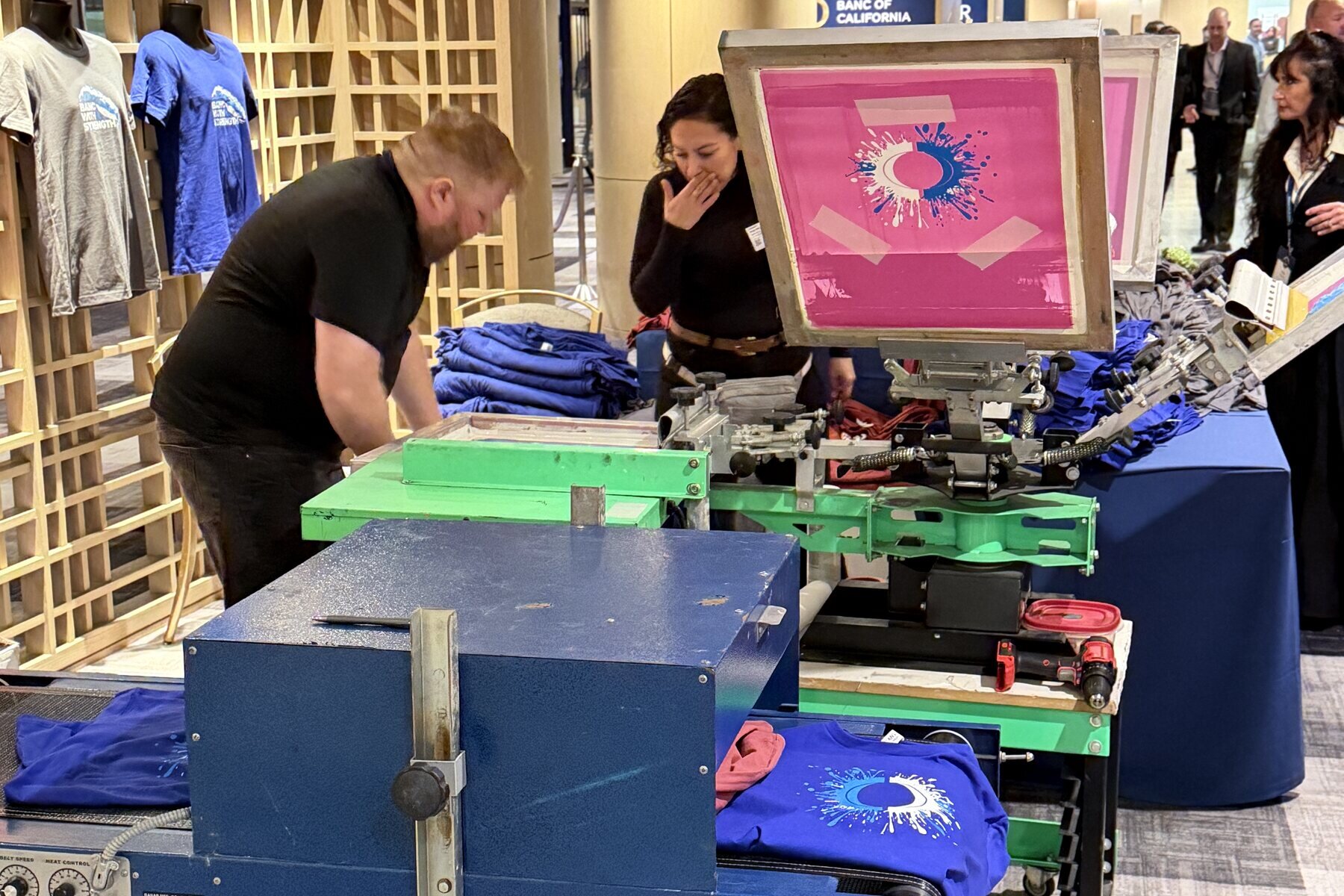
Every station in a program has a different natural pace, and the spread between them is wide enough to break a plan that ignores it. Flat printing is the fastest live method by a clear margin. Applied patch work and engraved pieces run slower but still briskly, because the mark is prepared and the on-site step is short. Embroidery is the outlier — a machine stitching a single structured piece is measured in minutes, not seconds, so an embroidery line carries a fraction of the hourly output of a print line with the same number of staff on it. Plan those lines separately or the slow one will define the guest experience of the whole program.
Rates do not aggregate the way planners expect
Three stations do not give you three times the capacity of one, because guests do not distribute themselves evenly across them. Uptake concentrates on whatever is most desirable, most visible or nearest the door, and the other stations idle while that one backs up. What actually raises program capacity is duplicating the popular line rather than adding variety beside it — two of the same station split a queue cleanly, whereas one of each just moves the congestion around. Decide which line will be the favorite and put your second unit there.
The bottleneck is almost never the machine
Watch any stalled merch activation and the constraint is at the front of the line, not at the equipment. Guests are deciding: which item, which color, which size, whether their partner wants one, whether that is really their size. Every one of those seconds is multiplied by the whole queue. The fixes are unglamorous and enormously effective — a short menu rather than an open catalogue, sizes laid out visibly, someone taking the next order while the current piece is in production, and signage that answers the obvious questions before anyone reaches the front.
Sizing station count against a guest list
Work from uptake, not attendance. Estimate what share of the guest list will claim each line — it is rarely everyone, and it is not the same share for every item — then divide by the hours the station is genuinely open, and keep a meaningful margin above that figure. Then sanity-check the shape of the demand: guests arrive in waves that track the run of show, so the peak half-hour after a keynote or a toast is what you must survive, not the average across the evening. A program sized to its average will queue badly exactly when the room is fullest.
When to add a station instead of hours
Add a station when the open window is short and sharp, when the peak is concentrated rather than spread, or when a slow method sits on a popular line. Add hours when demand is steady and the room stays open anyway. Because the first station carries the setup and teardown of the whole program at $250 an hour while each additional station is $125, widening capacity costs about half as much per hour as starting it did. Send us the attendance, the run of show and the item list, and we will size the station count against them rather than guessing.