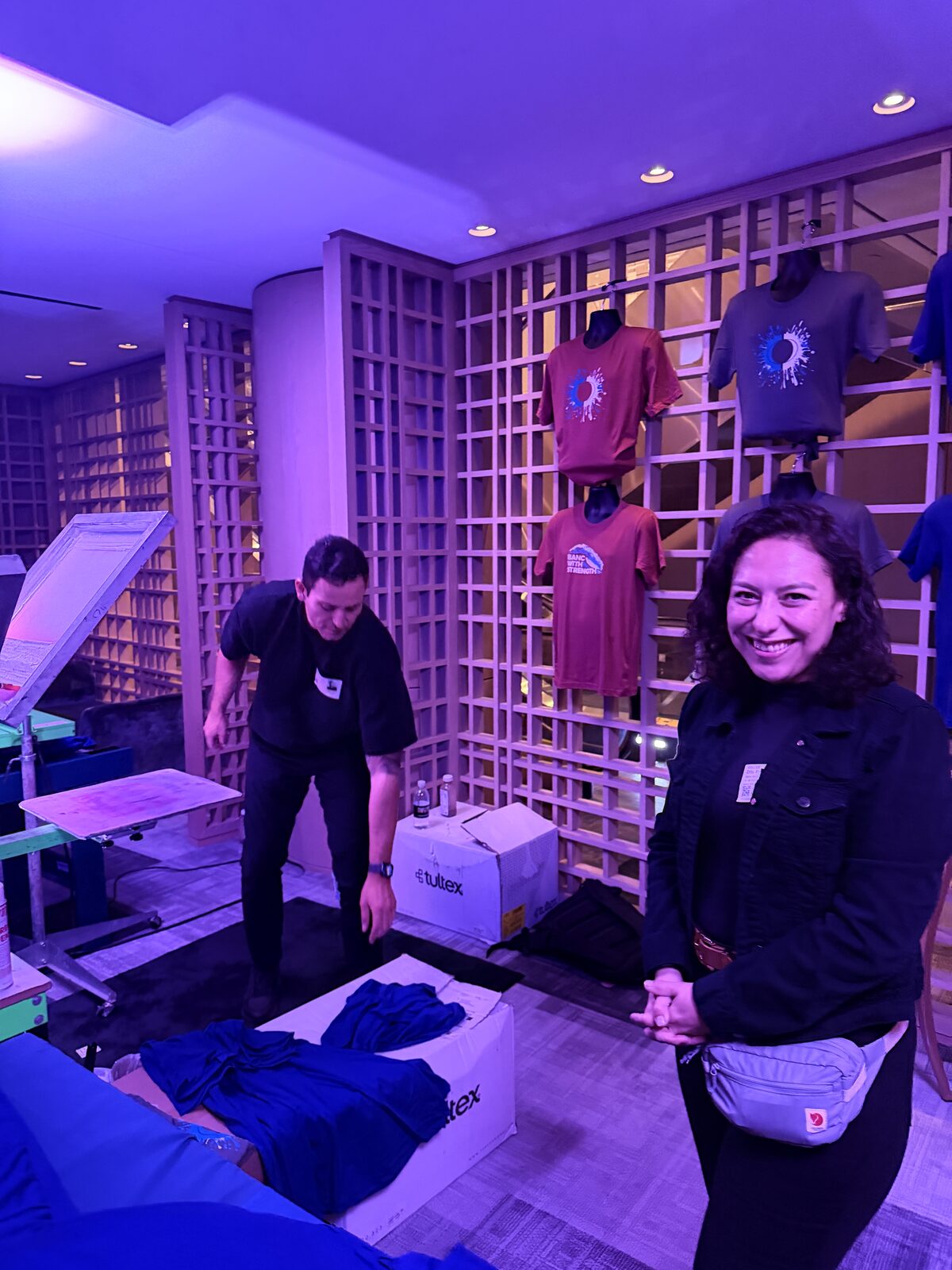
The short answer
Decide it line by line, not once for the whole program. Three inputs settle it: what the blank is, how many of that blank you are making, and how complicated the artwork is. Long runs of simple art on flat cotton belong on a screen. Short runs, full-color art and anything carrying a guest's name belong on film. Structured pieces like caps and jackets want a needle or a patch. Rigid goods want UV. A ten-line program routinely spans three or four methods, and that is the correct outcome, not a compromise.
Start from the item, never from the method
Planners usually arrive asking which decoration process is better. At program level that question has no answer, because the process is downstream of decisions you have already made — the blank, the quantity and the art. Lock those three and the method assigns itself with very little argument. Ask it the other way round and you end up paying screen setup on a run of twelve, or forcing a curved, seamed cap through a process built for flat cotton. Sequence the decision correctly and half the cost problems in a merch program disappear before anyone quotes it.
Fork one: how long is the run?
Setup is the whole story. Screen work carries a real per-design, per-color preparation cost that gets amortized across the run, so it gets cheaper the deeper the quantity goes and it is punishing on a run of a dozen. Film-based transfer work carries no meaningful per-design setup, which makes it the sane choice for the small lines a program is full of — the twenty staff jackets, the fifteen sponsor pieces, the one-off for the founder. Count your lines before you count your units: most programs have two or three deep ones and a long tail of shallow ones, and those two groups do not belong in the same process.
Fork two: how complicated is the art?
Simple, flat, one- or two-color marks reproduce beautifully and cheaply on a screen, and every extra color adds another screen and another pass. Gradients, photographic imagery, illustration with a dozen colors, and anything that changes per guest — a name, a date, a department — all point away from screens entirely, because the complexity is resolved before the item is ever touched. If a line in your program says "each recipient's name," that line has already chosen its method, whatever the rest of the program is doing.
What each item on a typical program gets
| Item on the program | Usually decorated by | What actually decided it |
|---|---|---|
| Tees and totes, deep run | Screen | Volume plus simple art earns the setup |
| Personalized or full-color tees | Film transfer | Run of one; color count irrelevant |
| Caps and beanies | Embroidery | Curved, structured, seamed surface |
| Jackets, fleece, canvas bags | Embroidery or patch | Heavy texture; stitched marks wear better |
| Drinkware and hard goods | UV | Rigid, non-textile surface |
| Leather-look badge pieces | Laser patch | Short lines, per-guest text, premium feel |
The right answer for a program is usually "several"
A program that runs one method everywhere is either overpaying on its shallow lines or underserving its structured ones. The version that works assigns each line its own process and then treats the mix as a logistics question — which methods share a station, which need their own operator, which have to be produced ahead rather than on site. Send us the item list with quantities beside it and we will mark the method against each line before anyone talks price, because the method assignment is what the price is built on.