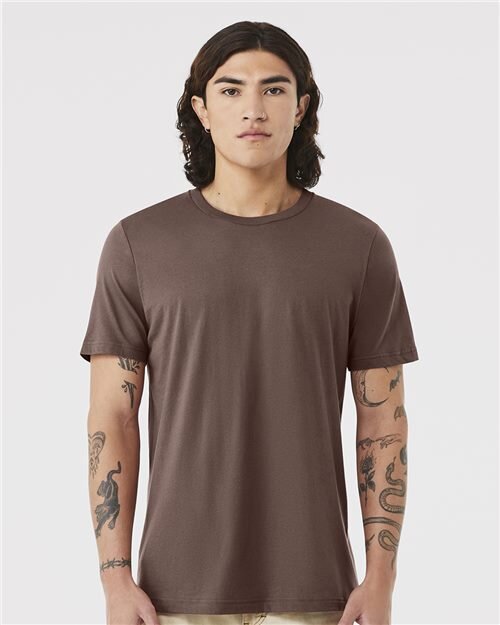
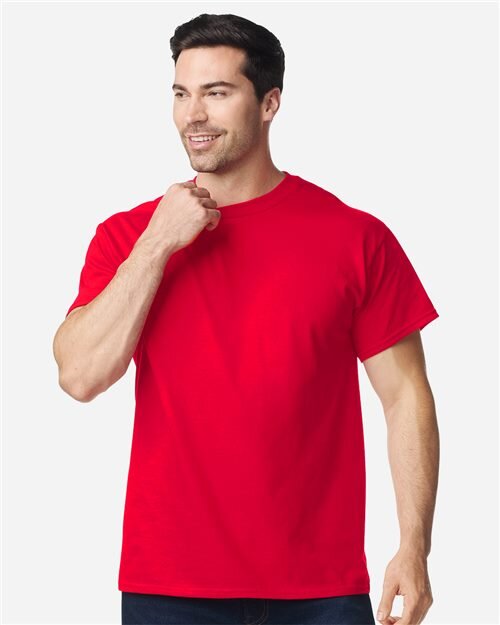
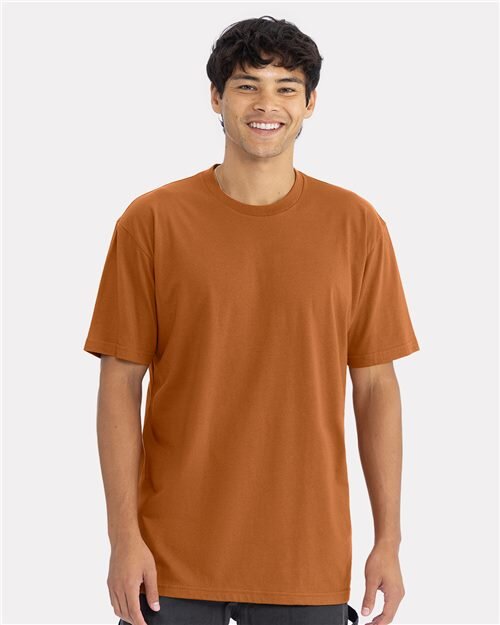
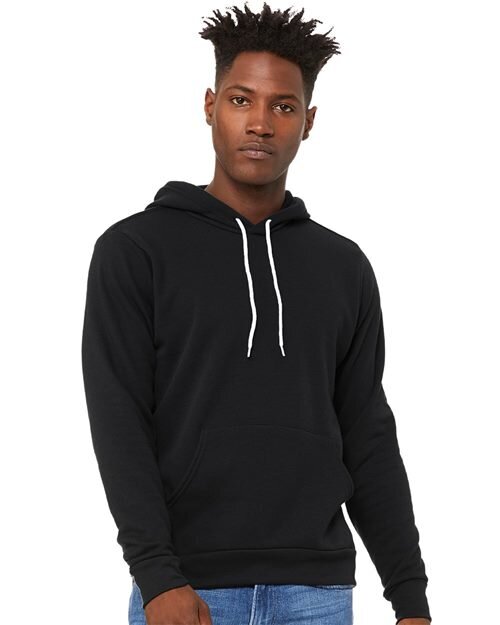
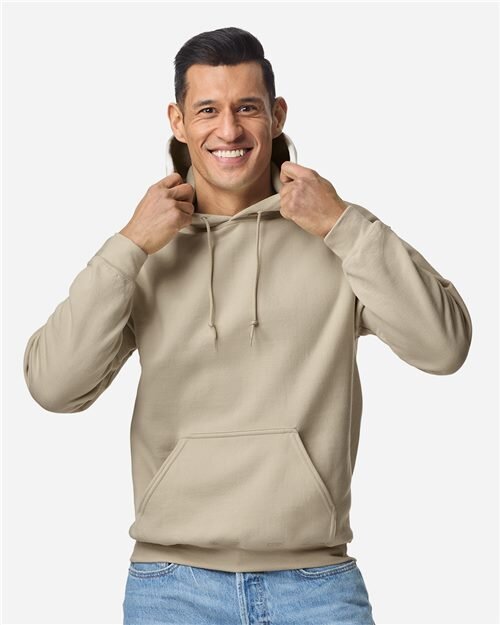
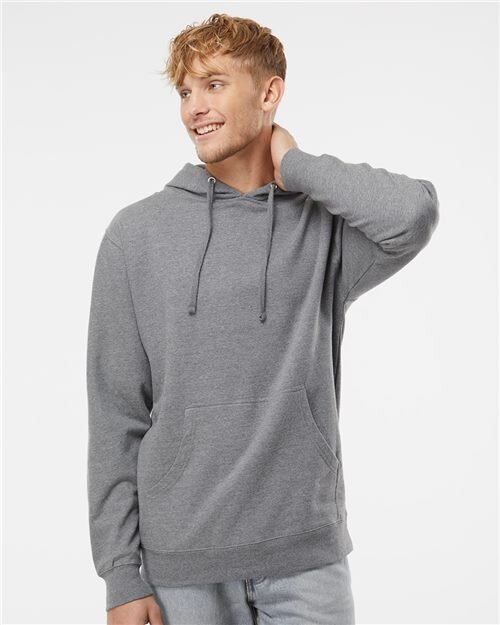
Every merch plan eventually runs into the same question: how many do you actually order? Come up short and you are turning guests away at seven o’clock. Order long and you are looking at four sealed cartons in a storage unit in January. Event merch inventory and leftover management is unglamorous work, but it decides whether the program reads as sharp or wasteful in the post-event debrief.
Live printing shifts the math in your favour. When decoration happens on site, your inventory stays blank goods right up until a guest asks for something — and blank goods have a second life that printed goods do not.
Start from attendance, then cut to throughput
The working rule is 1.05 to 1.15 pieces per expected guest. Use the low end when entry is ticketed and scanned and you have a hard headcount. Use the high end when there are plus-ones, walk-ups, staff, vendors, and a street-facing gate — all the people who never appear on an RSVP list but absolutely will take a shirt.
Then do the part most planners skip. Cap that number against what your stations can physically produce. A DTF or heat-press station finishes roughly 60 to 90 pieces per hour. A hat press does 30 to 45. Live embroidery runs 6 to 12 minutes per piece, which is a completely different order of magnitude. If you have one press and a four-hour activation window, your ceiling is around 300 pieces. Buying 700 blanks against that station is not a hedge against demand — it is a decision to have 400 leftovers.
Order to the smaller of the two numbers. If the attendance math says you need more than the stations can deliver, the fix is another station, not another carton.
You do not run out of shirts, you run out of larges
Total quantity is the number everyone argues about. Size split is the number that actually causes the failure. A reasonable starting curve for adult unisex tees at a mixed-audience event is something close to 10 percent small, 20 percent medium, 27 percent large, 25 percent XL, 12 percent 2XL and 6 percent 3XL. Treat that as a starting point, not gospel.
Then adjust for who is actually coming. Skew up a size for sports crowds, trade audiences, and older demographics. Skew toward large and XL again for fashion-forward and streetwear crowds, because oversized is the look and nobody is asking for a fitted medium. Youth sizes are the single most common leftover in this business — only carry them if children are genuinely expected, and even then keep the run small.
If you want to offer a ladies’ cut alongside unisex, carry a full curve of it or skip it. Half a curve produces more disappointed guests than no curve at all. Our notes on choosing shirts for live printing go deeper on blank selection itself.
One pool of blanks, three designs
Pre-printed merch forces you to guess twice: how many, and in what split across your designs. Get the split wrong and you have 200 of the design nobody wanted while the popular one sold out at noon.
Live printing collapses that into one decision. Every blank in the box can become any of your designs, so the crowd decides the mix in real time and you carry a single inventory instead of three. That is the strongest inventory argument for on-site decoration, and it is worth more than most planners realise.
One caution that follows from it: keep blank colours few. Two colours per item is a good ceiling. Every extra colour fragments your size curve into a smaller, more fragile set of piles, and it is the fragmentation, not the total, that makes you run out of large at 6pm.
Track it hourly, not by feel
Give the station lead a clipboard with a grid: sizes down the side, hours across the top. Count remaining stock on the hour. It takes ninety seconds and it is the difference between managing the tail of the event and being surprised by it.
Set a trigger. When a size drops under roughly 15 percent of its starting count, pull it off the visible display, hold the remainder back for staff, VIPs and speakers, and brief the crew to steer guests toward what is actually in stock. Guests handle being told a size is nearly gone. They do not handle being handed an empty table.
Track pieces produced against clock time on the same sheet. If you are behind pace at the halfway mark, you can still fix it by simplifying the design menu or adding a press. If you find out at the end, you cannot.
Write the leftover plan before you place the order
Decide now, in the planning phase, where surplus goes. In rough order of usefulness: roll it into the next event on the calendar, absorb it into staff and internal use, donate it, or return it to the supplier.
Returns are the option people discover too late. Ask about the return window and restocking terms before the purchase order goes out, not after the event. Unworn stock in the original polybag inside the window has a real chance of going back. A printed shirt has none — the moment ink hits the garment it stops being inventory and becomes a liability. That is another quiet argument for decorating on demand.
Two habits worth keeping. Do not date anything you pre-print, so the surplus stays usable next season. And photograph the final size tally before you break down the station, because that sheet is the most valuable thing the event produces for next year’s order. Three events of real counts beats any formula, including this one. If budget is the constraint driving the quantity conversation, our event merch budget guide and the pricing page lay out where the money actually goes.
Frequently asked questions
How many shirts should I order for 500 guests?
Start at 1.05 to 1.15 pieces per expected guest, so roughly 525 to 575. Then check that number against what your stations can physically decorate. One DTF press finishes about 60 to 90 pieces an hour, so a four-hour window on a single station tops out near 360 no matter how many blanks are in the truck. Order to the smaller of the two numbers.
Which sizes run out first at an event?
Large and extra-large, almost every time. Mediums go next. Small and 3XL are the two ends people over-buy. If you only have budget to over-order one size, make it large.
Can I return blanks that were never printed?
Often yes, but only if you ask before you place the order. Most apparel suppliers accept unworn, unfolded stock in the original polybag inside a set return window, usually with a restocking charge. Keep the cartons sealed on site and only open what you need, because a shirt that has been unfolded and handled is much harder to send back.
Get the quantities right the first time
Send us your expected headcount, run time, and audience and we will model the order and the station count together, so the two numbers actually agree. Start with a free quote or call (562) 614-4800.